
Table of Contents
DePIN, short for Decentralized Physical Infrastructure Networks, is where blockchain technology meets the management of real-world assets (RWA).
It’s a new way to manage things like telecommunications, transportation, computing powers, smart cities, and power systems using a decentralized approach.
This means that instead of one company or government running everything, it’s the community that helps take care of these important services.
People who help out can earn tokens – a type of digital reward. This makes it so that more people want to get involved, and it also creates a new way for everyone to have a share in and make some money from these big projects.
What is DePIN?
DePIN stands for “Decentralized Physical Infrastructure Network.” This is a fancy way of saying it is a system that connects physical things, like buildings or machines, using technology that is not controlled by one single person or company.
Instead, many people can participate and help manage it.
Let’s analyze each word within DePiN:
- Decentralized (De): When we say “decentralized,” we mean that no single person or organization has all the power. Many entities contribute and the “power” is distributed among the many. So, there isn’t one point of failure.
- Physical Infrastructure (Pi): Physical infrastructure refers to the actual “things” that power up a project. For example, think of servers that power up a project. Or thing of the the roads internet routers that emit WiFi signal and connect your home to the web.
- Network (N): A network is like a web that connects different points. In DePIN, it connects various physical infrastructures, allowing them to communicate and work together.
So, a Decentralized Physical Infrastructure Network, is a group of entitied (individuals, companies etc) that provide the infrastructure to create a network.
Key Features of DePIN
DePIN uses blockchain and smart contracts to create decentralized networks that are resistant to censorship and don’t have a single point of failure.
Tokens are used to align the interests of participants, encouraging them to contribute resources and act in ways that benefit the network.
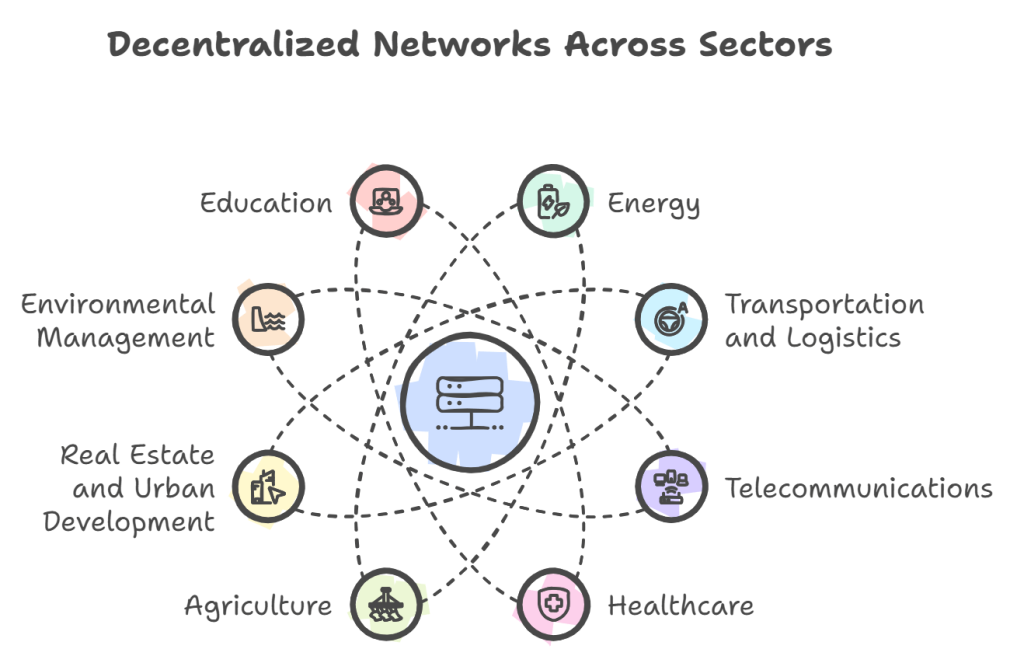
The flexible DePIN architecture can be used in various industries, such as decentralized wireless networks, ride sharing, and marketplaces for IoT data.
1. Decentralization
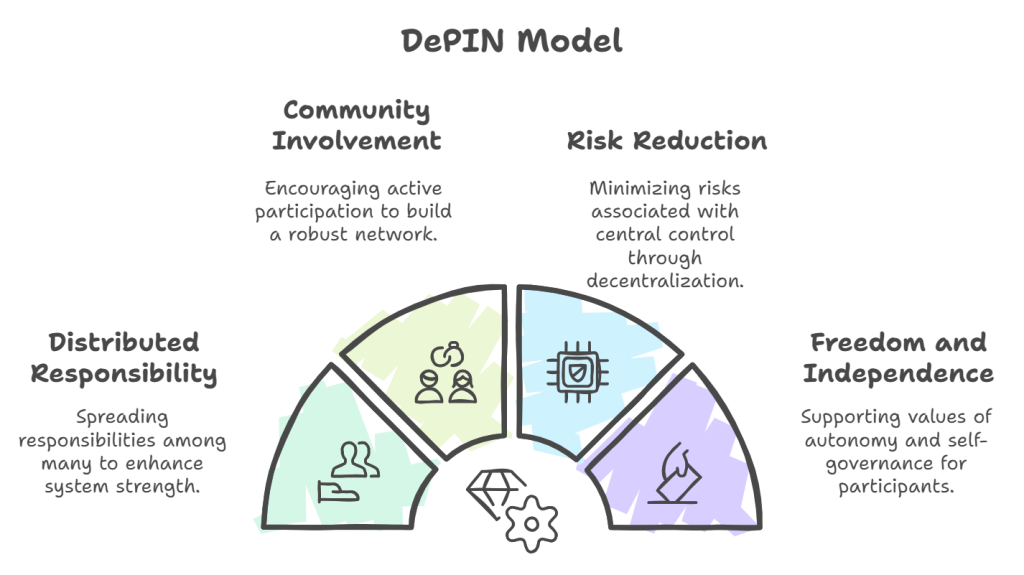
At the core of the DePIN model is the idea of spreading out responsibility and rewards for building and maintaining infrastructure across many participants, instead of having one central authority in control.
This makes the system stronger by avoiding single points that could fail and encourages the community to get involved.
By sharing power and decision-making, DePIN networks reduce the risks that come with having one central control point, like censorship, misuse of power, and service interruptions.
In DePIN, individuals can contribute to and profit from the growth and upkeep of the network, which supports the key values of freedom and independence that its participants care about.
2. Blockchain Technology
Blockchain technology is the foundation of the DePIN model, making sure the network is secure and reliable.
It creates a permanent record of all transactions and activities within the DePIN ecosystem, which can be easily checked by anyone.
This builds trust among participants, as they can verify that contributions and rewards are accurately recorded on the blockchain.
The decentralized nature of blockchain also fits well with DePIN’s core principles, removing the need for middlemen and promoting individual control.
3. Smart Contracts
Smart contracts work like automated agreements that carry out tasks when certain conditions are met, without needing someone to oversee them.
For example, they can handle payments or start providing services automatically. This cuts out the middleman, making the network run smoother and needing less oversight.
4. Token Incentives
In the DePIN ecosystem, tokens are used to motivate and reward people for their contributions.
Basically, if you provide resources like computing power or connectivity services to the network, you get paid in tokens.
This system makes sure that everyone who helps out is fairly compensated, and it encourages more people to participate.
The more resources you contribute, the more tokens you can earn. This creates a win-win situation where the network grows, and so do the rewards for the people involved.
5. Versatile Applications
DePIN is very versatile. It can be used in many different areas, like crowd-sourced mapping services and advanced marketplaces for infrastructure.
This wide range of uses is key for dealing with lots of different operational systems, both in industry and in everyday life.
This flexibility means that DePIN can meet many different needs, from making supply chains more transparent to allowing peer-to-peer transactions without middlemen. This creates an environment where freedom and innovation can flourish.
6. Economic Impact
DePIN allows for the sharing of resources like storage, computing power, and bandwidth, which dramatically lowers the cost for smaller companies. This access to affordable infrastructure can level the playing field, enabling startups and SMEs to compete with larger corporations.
Categories of DePIN
DePIN has two main types: Physical Resource Networks (PRNs) and Digital Resource Networks (DRNs).
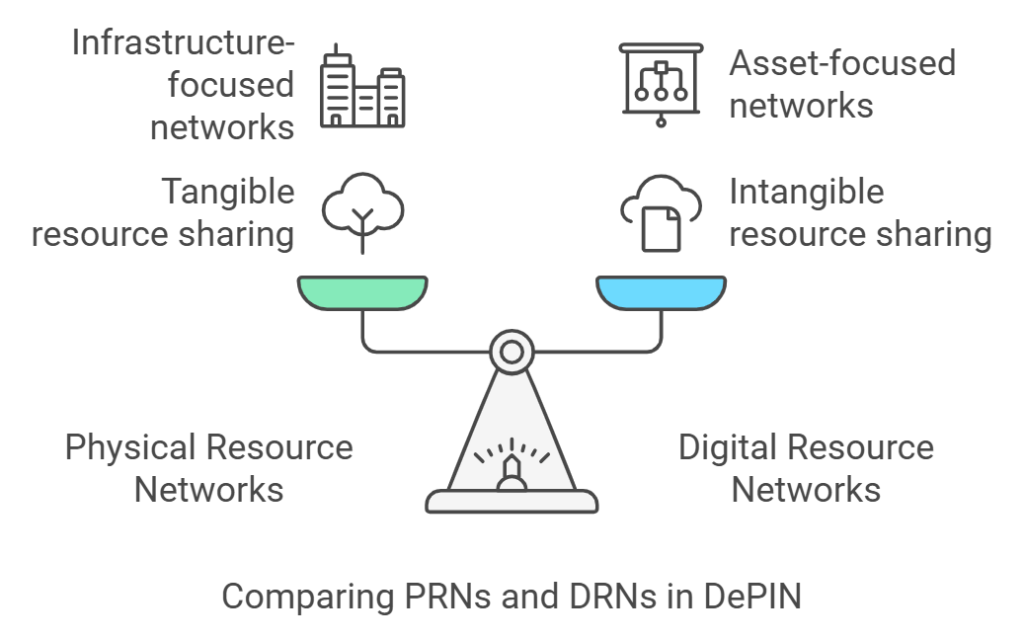
Physical Resource Networks (PRNs):
PRNs are networks where physical resources such as storage space, bandwidth, or computing power are shared among participants in a decentralized manner. These networks leverage the distributed resources of individual participants to create a collective infrastructure.
Examples include:
- Helium Network: Provides decentralized wireless infrastructure.
- Hivemapper: Creates decentralized maps using user-contributed data.
- Natix Network: Uses smartphones as AI-powered cameras to collect mobility data, such as traffic and road conditions, rewarding users with tokens for sharing insights
Digital Resource Networks (DRNs)
On the other hand, DRNs involve the sharing and utilization of digital resources such as data storage, computing power, and digital assets, in a decentralized manner. Participants contribute their unused digital resources to the network and are rewarded for their contributions.
Examples include:
- Filecoin: A decentralized storage network.
- Golem: A decentralized supercomputer for computing tasks.
- GRASS: A decentralized Ai training model that feeds ai models with real time data.
- Render: A decentralized network of computing power to render graphics.
What Are Some Notable DePin Projects?
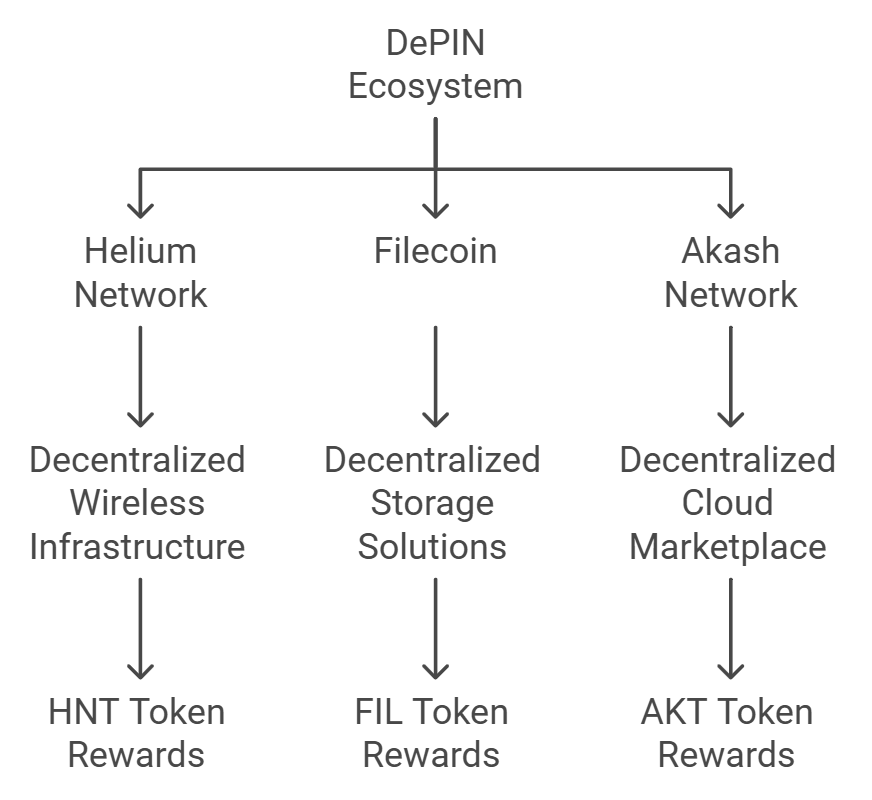
Some important projects in DePIN have made interesting contributions to the field. Some well-known projects include Helium Network, Filecoin and Akash Netwok.
Helium Network
The Helium Network is a leader in creating decentralized physical infrastructure.
It uses blockchain technology to encourage people to set up and maintain hotspots for a wireless network that connects Internet of Things (IoT) devices.
People who help provide network coverage and transfer data are rewarded with HNT tokens.
This system creates a strong, decentralized network and promotes a sense of community and shared ownership among participants, which aligns with the principles of freedom and decentralized governance in DePIN projects.
Filecoin
Filecoin is a decentralized storage network that allows users to rent out their extra hard drive space and earn FIL tokens in return.
Instead of relying on centralized data centers, Filecoin uses a global network of participants to create a more efficient and secure storage solution. This approach not only improves data security but also promotes independence from centralized entities.
By contributing their storage resources to the network, users actively participate in the decentralized ecosystem and earn FIL tokens.
Akash Network
Akash Network is a project that uses blockchain technology to create a marketplace for buying and selling cloud computing resources.
It allows users to access these resources in a cheaper and more flexible way than traditional cloud service providers.
The platform rewards users with AKT tokens for their contributions, which encourages participation.
This decentralized model increases competition, lowers costs, and gives users more control over their cloud infrastructure.
Conclusion
DePiN is a new way of managing real-world infrastructure using blockchain technology.
It gets the community involved, rewards people with tokens, and lets everyone have a say in decisions.
This makes things more efficient in different areas and gives more people a chance to own a piece and earn money. It’s a big change towards a more open and shared way of managing infrastructure.
Previous Articles:
- DoJ Probes Polymarket as FBI Raids Founder’s Home Over US Customer Access
- GOP House Victory Signals Potential Crypto-Friendly Shift Under Trump Administration
- Bitcoin Surges Past $93,000, Setting New All-Time High Amid Rising Demand
- UFO Tech ‘3000 Times Faster’ Than Military Jets, Congress Hearing Reveals
- FBI Raids Crypto Prediction Platform CEO’s Home After Trump Victory Forecast

