
You need a VPS. You want to pay with Bitcoin. Simple enough, right?
Not quite. The market for crypto VPS = VPS hosting that accepts cryptocurrency payments is crowded with options ranging from budget providers to premium privacy specialists.
Some accept Bitcoin as an afterthought through third-party processors. Others built their entire infrastructure around cryptocurrency payments and privacy-first principles.
This guide cuts through the noise. You’ll get a detailed comparison of 12 vetted Bitcoin VPS providers, a step-by-step buying process, and warnings about mistakes that could cost you money or compromise your setup.
By the end, you’ll know exactly which provider matches your needs and how to complete your purchase without issues.
QUICK LINKS
Why Bitcoin for VPS Hosting?
Paying for hosting with Bitcoin isn’t just about following crypto trends. It offers tangible advantages that traditional payment methods can’t match.
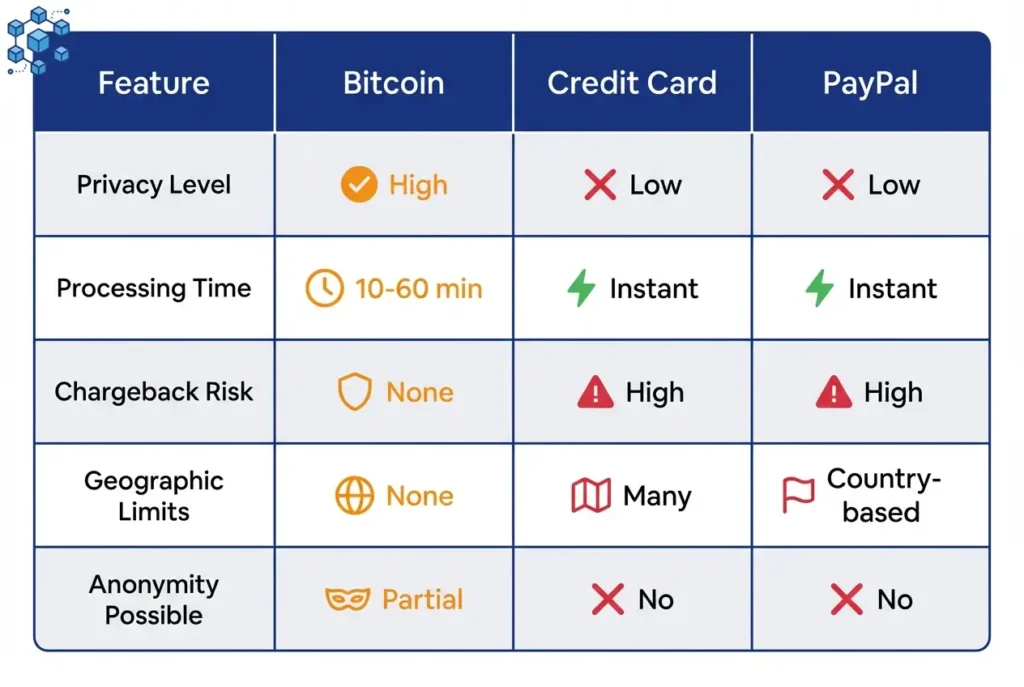
Credit cards and PayPal tie your identity directly to your hosting account. Every transaction creates a paper trail linking your name, address, and payment details to your server activity. Bitcoin transactions, while recorded on a public blockchain, use wallet addresses instead of personal information. KYC stands for Know Your Customer, the identity verification required by banks and payment processors. Many Bitcoin VPS providers require minimal personal data. You can often register with just an email address.
This does not mean complete anonymity. Your IP address, usage patterns, and DNS queries still create identifiable fingerprints. You still gain more privacy compared to handing over your credit card details.
Traditional payment processors block transactions from many countries. Sanctions, fraud prevention systems, and banking restrictions create barriers. Bitcoin operates outside these systems. If you have a wallet and an internet connection, you can buy hosting from almost anywhere.
This matters if you travel often, work remotely from multiple countries, or live in a place with restricted banking access. Bitcoin removes geographic payment barriers for your hosting payments.
Cryptocurrency payments remove chargebacks and reduce fraud risk for providers. For you, this means fewer account freezes and fewer surprise suspensions due to payment disputes. Once Bitcoin confirmation completes, the transaction is final. No bank can reverse it, no payment processor can flag it as suspicious, and no intermediary can block it.
The blockchain provides a permanent record of your payment, while your personal identity stays separate from the transaction itself.
Critical VPS Features to Evaluate
Bitcoin acceptance matters, but your VPS still needs solid fundamentals. Payment method becomes irrelevant if your server performs poorly or goes offline regularly.
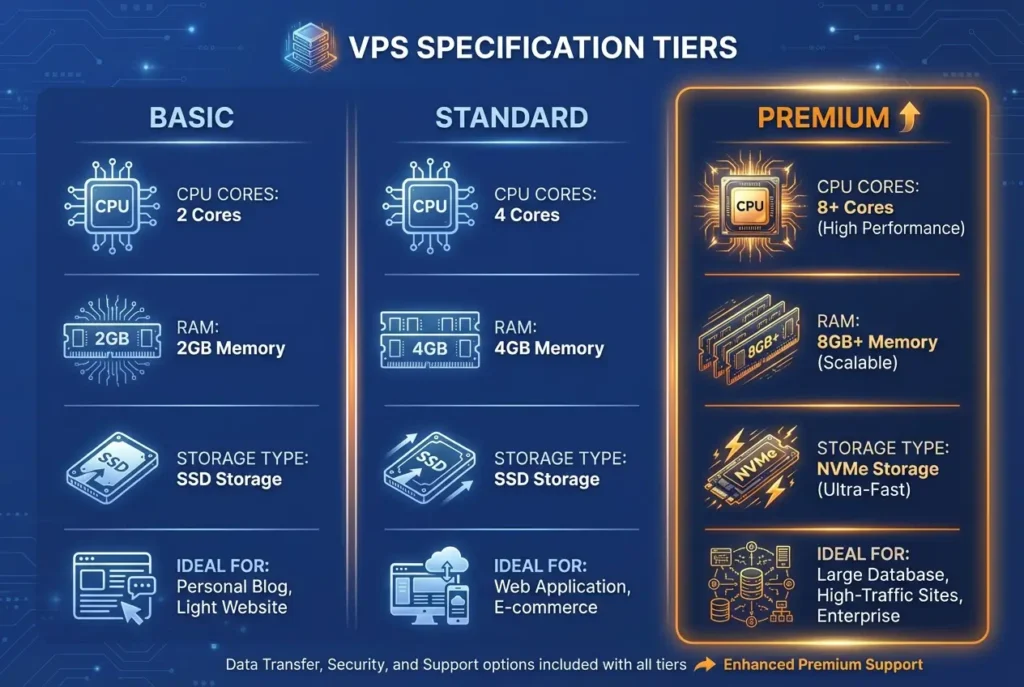
CPU allocation controls how many simultaneous processes your server handles well. For basic applications you should look for at least 2 cores. For databases or application servers aim for 4 or more cores so your workload does not stall under load.
RAM type matters less than amount. DDR4 is standard. Quantity matters more than small speed gains. Plan for 2 GB as a minimum. Use 4 GB or more for web applications and 8 GB or more for databases or heavy workloads.
Storage technology has a large impact on performance. Traditional SSDs provide good speed. NVMe is a newer, faster type of SSD that can deliver roughly 5 to 7 times faster read and write operations according to storage vendors. If your application relies on database queries or frequent file operations, NVMe storage often justifies a higher price.
If your budget only covers standard SSD storage, you still gain a large boost over traditional hard drives. Start with SSD if needed and upgrade to NVMe later when your application or traffic requires more performance.
Bandwidth caps can damage your budget through overage fees. Many providers market unlimited bandwidth but throttle speeds after specific thresholds. You should read the fine print. Look for clear GB per month allocations or truly unmetered connections with realistic speeds for your use case.
Network speed refers to connection bandwidth. You typically see 1 Gbps shared links or 100 Mbps dedicated links. Shared connections work for most applications. Dedicated bandwidth starts to matter when you run high traffic sites, APIs, or streaming applications.
Uptime guarantees show you how serious a provider is. Aim for at least 99.9 percent uptime, which equals about 8.76 hours of downtime per year. Top providers offer 99.95 percent or higher. Check how the SLA, Service Level Agreement, works in practice and if credits apply automatically or only after you open support tickets.
DDoS protection defends against coordinated attacks that try to overwhelm your server. Basic protection to block volumetric attacks should come as standard, because attacks happen to all types of servers. Advanced protection can filter application level attacks but usually costs more.
Managed versus unmanaged VPS changes your workload. Managed VPS plans include operating system updates, security patches, and basic software maintenance. Unmanaged plans give you root access and full administrator control, but you handle configuration, security, and updates yourself.
Choose managed hosting if you do not have strong Linux administration skills or time to manage the server. Choose unmanaged hosting if you need custom configurations or want full control over every part of the stack.
Backup policies vary across providers. Some include automated daily backups in the plan. Others charge per GB or provide no backups at all. Manual backups through your control panel work but require discipline. Automated backups with retention windows, for example 7 to 30 days, give your data better protection.
Data center location affects latency directly. A user in Tokyo can see 200 milliseconds or more of latency to a New York data center. Choose locations close to your primary audience. If a provider offers multiple data center options you can place different workloads in regions that match your users.
Support quality becomes clear when problems happen, not during the sales process. Check if the provider offers true 24/7 support or only business hours. Live chat often gets faster responses than email tickets. Phone support appears less often in budget hosting but can speed up resolution for critical outages.
SLA terms define how the provider compensates you for failures. Standard SLAs often give account credits, for example 5 to 10 percent per incident. Stronger SLAs can offer cash refunds and commit to maximum response times for different severity levels.
How do I know which specs I actually need?
Start with your application requirements. A WordPress blog runs fine on 2 cores, 2GB RAM, and 40GB SSD. A PostgreSQL database serving 1,000 concurrent users needs 4+ cores, 8GB+ RAM, and NVMe storage. When in doubt, start smaller and scale up. Most providers allow easy upgrades.
How to Buy VPS with Bitcoin: Step-by-Step
The purchasing process follows a consistent pattern across most Bitcoin VPS providers. Understanding each step prevents payment errors and provisioning delays.
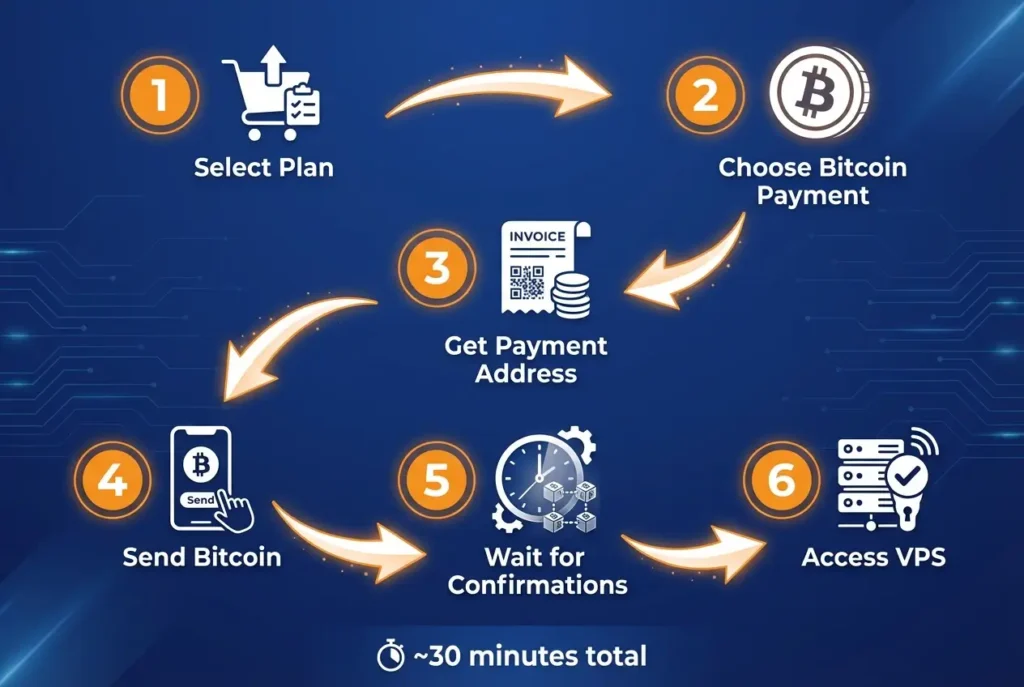
Browse the provider VPS plans and choose one that matches your requirements. Pay attention to monthly versus annual billing. Annual plans often give 10 to 20 percent discounts but require a larger upfront Bitcoin payment.
Add your selected plan to the cart. Some providers let you customize resources during checkout, such as RAM, storage, or bandwidth. Others require you to pick a different plan tier if you need more capacity.
Enter the required account information. Most Bitcoin VPS providers ask for minimal details such as email address, username, and password. Some providers collect more data to meet compliance rules.
On the payment method screen, choose Bitcoin or cryptocurrency payment. Providers may use direct wallets, processors such as CoinGate, BitPay, or NOWPayments, or other crypto gateways. The interface looks different across providers, but the overall payment flow stays similar.
The system generates a unique payment invoice. It includes the exact Bitcoin amount, the destination wallet address, and a payment expiration time, usually 15 to 30 minutes. The address should be unique for this invoice and not reused.
Copy both the amount and the address carefully. Double check both before you send the transaction. A single character error can send your Bitcoin to a different address permanently.
Many systems also show a QR code for mobile wallets. Scanning the QR code reduces manual entry errors and speeds up the payment step.
Open your Bitcoin wallet, hardware, software, or exchange account. Create a new transaction using the exact amount from the invoice. Most systems expect you to pay network fees on top so the provider receives the full invoice amount.
Network fees change with blockchain congestion. As of 2025, typical Bitcoin transaction fees average about 0.60 to 2.40 US dollars. During heavy traffic, fees can reach 10 to 20 dollars or more per transaction, based on blockchain data from 99Bitcoins and BitInfoCharts. Some budget providers absorb this cost, but most pass it on to you.
Send the transaction and record the transaction ID, TXID. This unique code identifies your payment on the blockchain and helps prove payment if any issues occur.
Bitcoin payments need blockchain confirmations before providers credit your account. Most providers require 1 to 3 confirmations. Under normal conditions this takes about 10 to 30 minutes. During congestion, confirmations can take several hours.
The payment processor usually shows real time confirmation status. You may see 0 of 3 confirmations, then 1 of 3, and so on as miners add blocks. When the required confirmations complete, the payment status changes to confirmed.
After payment confirmation, the provider starts provisioning your VPS automatically. Most providers deploy the server within about 5 to 15 minutes, depending on their automation system.
You receive an email with your server IP address, root password or SSH key instructions, control panel login details, and any needed network configuration information.
Log in through SSH or your control panel and verify that the server matches the resources and configuration you ordered.
This process sounds complex written out, but takes under 30 minutes in practice once you’ve done it once.
Top Bitcoin VPS Providers Comparison
Here’s how 12 leading Bitcoin VPS providers stack up on price, features, and payment integration.
| Provider | Start Price | Bitcoin Support | Data Centers | Best For |
|---|---|---|---|---|
| RackNerd | $11.29/year | Via Coinify | US (10+ locations) | Budget buyers |
| Hostinger | $4.99/month | Via processor | Global (9 countries) | Beginners |
| Namecheap | $9.88/month | Via BitPay/BTCPay | US, EU | Domain bundling |
| Snel.com | €15/month | Direct acceptance | EU (Netherlands) | Performance |
| Abelohost | €12/month | Direct and private | EU (Multiple) | Privacy focus |
| Shinjiru | $20/month | Via CoinPayments | Asia (Malaysia, HK) | Asian traffic |
| Host Sailor | $6/month | Direct acceptance | NL, RO | Custom setups |
| Hawk Host | $7.50/month | Via processor | US, CA, EU, SG | Reliability |
| Altus Host | CHF 15/month | Direct integration | Switzerland | Privacy laws |
| Impreza Host | $10/month | Multiple cryptos | US, EU | Quick deployment |
| Hostwinds | $7.50/month | Via processor | US, EU, SG | Windows VPS |
| Cherry Servers | Variable | Via CoinGate | EU, US | Web3 projects |
Let’s examine each provider in detail.
1. RackNerd
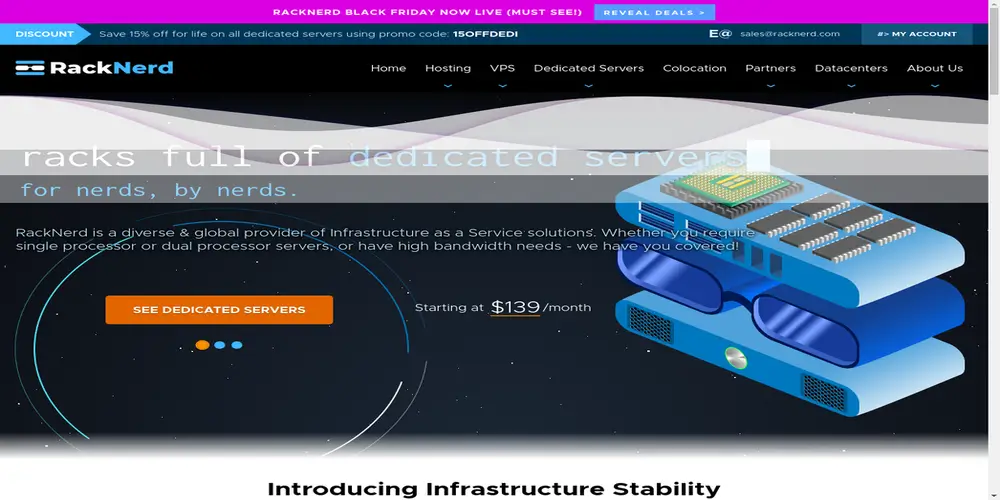
RackNerd positions itself as the budget-friendly option without sacrificing quality. The company operates 10+ US data centers including Los Angeles, Chicago, New York, Dallas, Atlanta, Ashburn, San Jose, Seattle, and maintains a strong reputation for reliable infrastructure at competitive prices.
Key Features:
- High RAM allocations relative to price point
- Free backup storage included
- Multiple US and European data center choices
- Weekly automated backups
- 24/7 technical support
- Listed on Inc. 5000 in 2024
💵 Pricing: Plans start at $11.29/year for 1 core, 1GB RAM, 24GB SSD storage. Mid-tier options at $20-40/year offer 2-4 cores, 2-4GB RAM, and larger storage allocations.
🪙 Bitcoin Payment Process: RackNerd accepts Bitcoin and other cryptocurrencies through Coinify, accepting over 30 different cryptocurrencies. During checkout, select cryptocurrency payment to generate an invoice. Confirmations typically process within 20-30 minutes.
✅ Pros: Competitive pricing undercuts most competitors. Free migration service helps transfer existing sites. Support responds quickly through live chat and tickets. Infrastructure reliability matches providers charging 2-3x more. Made Inc. 5000 list indicating strong growth and stability.
🤔 Cons: No managed service options available. You handle all server administration yourself.
🤩 Best for: Developers and small businesses needing reliable US-based hosting at minimum cost.
CHECK RACKNERD VPS HOSTING PLANS →
2. Hostinger
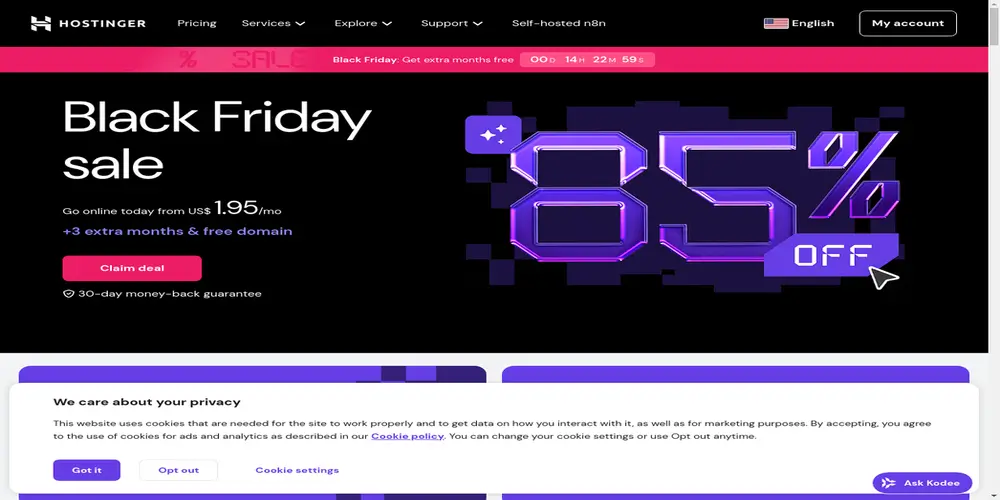
Hostinger expanded from shared hosting into VPS services with Bitcoin payment integration. Their global infrastructure and user-friendly approach make them accessible for first-time VPS buyers.
Key Features:
- Custom hPanel control panel (simpler than cPanel)
- Automated daily backups with 1-click restore
- 24/7 support via live chat in multiple languages
- Free website migration service
- IPv6 support standard
- Global data centers across 9 countries
💵 Pricing: Plans start at $4.99/month with regular promotional pricing. Base tier includes 1 core, 4GB RAM, 50GB NVMe storage, and 1TB bandwidth. (Ed. note: Pricing represents special promotional deals, verify current rates.)
🪙 Bitcoin Payment Process: Hostinger processes Bitcoin payments through integrated payment processors. Select Bitcoin at checkout, complete payment within the specified window, and your VPS provisions automatically after confirmations.
✅ Pros: User-friendly control panel. Extensive knowledge base and tutorial library. Strong uptime record. Multiple global data centers provide low-latency options worldwide.
🤔 Cons: Renewal prices increase significantly after first term (common hosting industry practice). Bitcoin availability may vary by region.
🤩 Best for: First-time VPS buyers wanting managed-style simplicity with unmanaged pricing.
- Hostinger Discount code PAVLOS10 grands 10% OFF. It applies to all Hostinger 12, 24, and 48-month plans.
- Hostinger Discount code BNBOT7 grands 7% OFF. It applies to all Hostinger 12, 24, and 48-month plans. It can stack on top of any special offer season (e.g Black Friday).
3. Namecheap
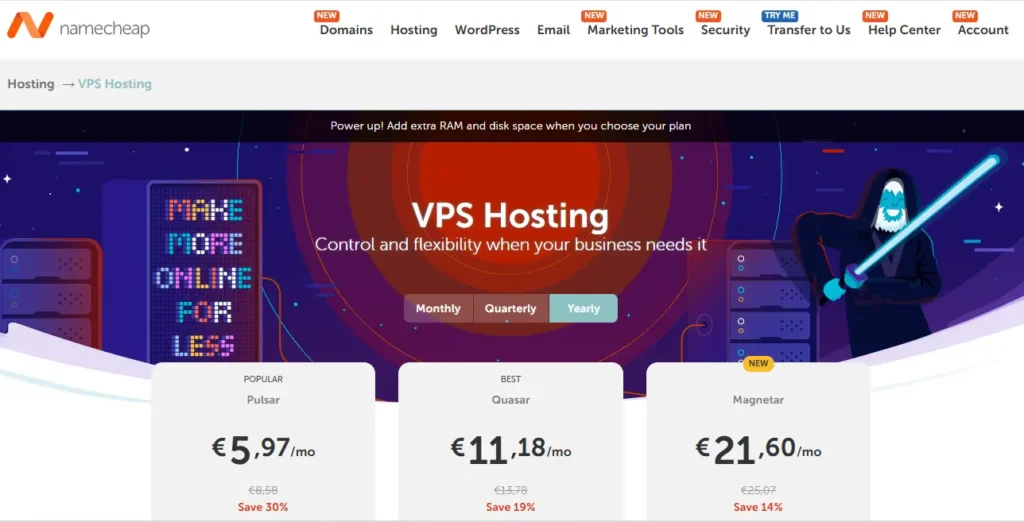
Namecheap built its reputation on domain registration before expanding into hosting services. Their VPS offerings combine straightforward pricing with solid performance and included management tools.
Key Features:
- cPanel/WHM included at no extra cost
- Full SSD storage across all plans
- Easy resource scaling without migration
- Free website builder included
- DDoS protection standard
- First domain registrar to accept Bitcoin in 2013
💵 Pricing: Entry plans start at $9.88/month for 2 cores, 2GB RAM, 40GB SSD, and unmetered bandwidth on shared 1Gbps connection. Mid-range options at $20-30/month include 4-6GB RAM and expanded storage.
🪙 Bitcoin Payment Process: Namecheap accepts Bitcoin through both BitPay and BTCPay processors. Choose Bitcoin payment during checkout, and the processor generates a 15-minute payment window. Send exact amount to provided address. System requires 1-2 confirmations before marking payment complete and beginning VPS provisioning. Namecheap has processed over $73M in Bitcoin revenue through these systems.
✅ Pros: Established company with strong reputation. cPanel inclusion eliminates $15-20/month licensing cost. Scaling options let you add resources without complex migrations. Supports both BitPay and BTCPay for payment flexibility.
🤔 Cons: Limited data center selection compared to global competitors. Support quality varies depending on issue complexity.
🤩 Best for: Users wanting cPanel management tools bundled with VPS hosting, particularly those already using Namecheap for domains.
CHECK NAMECHEAP’S VPS HOSTING PLANS →
4. Snel.com
Snel.com specializes in high-performance hosting with strong cryptocurrency integration. Based in the Netherlands, they focus on blockchain projects and privacy-conscious customers.
Key Features:
- Bare metal server options alongside VPS
- High-frequency CPU options (up to 4.5GHz)
- Low-latency network optimized for Europe
- Advanced DDoS protection
- Multiple cryptocurrency payment options
- KVM = technology providing full server isolation virtualization
💵 Pricing: VPS plans start at €15/month ($15-16) for 2 cores, 4GB RAM, 80GB SSD, and unmetered bandwidth. Premium plans reaching €50+/month offer 8+ cores, 32GB+ RAM, and NVMe storage.
🪙 Bitcoin Payment Process: Snel.com accepts Bitcoin payments directly to their wallet. No third-party processor involvement for basic transactions. Generate invoice at checkout, send payment, and receive confirmation typically within 1-2 blocks (10-20 minutes). They also accept Ethereum, Litecoin, and other cryptocurrencies.
✅ Pros: Performance specifications exceed most competitors at similar price points. Netherlands location provides strong data protection laws. Crypto-native company understands blockchain industry needs. Direct cryptocurrency acceptance.
🤔 Cons: Higher base pricing than budget alternatives. Limited to European data centers (advantage or disadvantage depending on target audience).
🤩 Best for: Performance-demanding applications and blockchain projects requiring European hosting with crypto payment options.
5. Abelohost
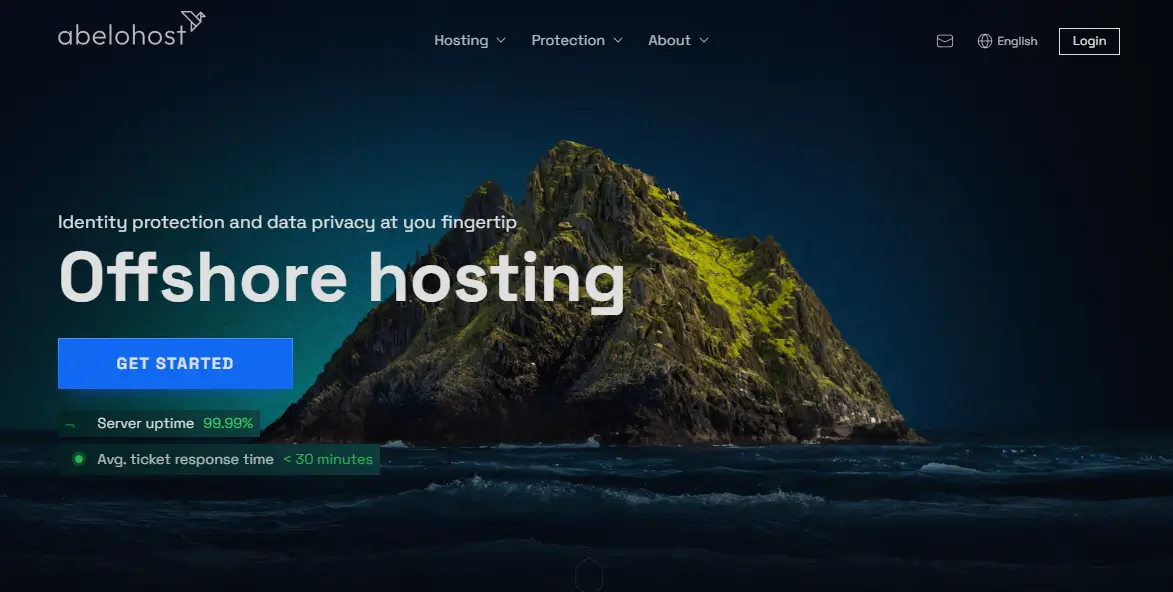
Abelohost positions itself explicitly for privacy-focused users. Anonymous registration, offshore hosting options, and encrypted infrastructure attract users prioritizing discretion.
Key Features:
- Anonymous registration (minimal personal information required)
- Offshore hosting location options
- Encrypted storage available
- No-logs policy for service usage
- DMCA-ignored hosting packages
- Privacy-first infrastructure
💵 Pricing: Plans start at €12/month ($12-13) for 1 core, 2GB RAM, 40GB SSD, and 2TB bandwidth. Mid-tier options at €20-30/month expand resources significantly.
🪙 Bitcoin Payment Process: Abelohost accepts Bitcoin directly without payment processors. Registration requires only username, password, and email (anonymous email services accepted). Payment confirmation takes 1-3 confirmations depending on order size.
✅ Pros: Strongest privacy stance among mainstream providers. EU locations benefit from data protection regulations. Accepts truly anonymous registrations. Direct Bitcoin acceptance without intermediaries.
🤔 Cons: Limited support channels (email only, no live chat). Smaller company means potentially less infrastructure redundancy.
🤩 Best for: Privacy-conscious users needing offshore hosting or anonymous registration capabilities.
6. Shinjiru

Shinjiru focuses on Asian markets with data centers in Malaysia and Hong Kong. Operating since 2000, their cryptocurrency payment integration serves the crypto-friendly Asian market with offshore hosting specialization.
Key Features:
- Asian data center locations (Malaysia, Hong Kong)
- Automated malware scanning and removal
- Compliance tools for regulated industries
- Multiple cryptocurrency payment options
- Offshore hosting specialization
- 99.9% uptime SLA standard
💵 Pricing: VPS plans start at $20/month for 2 cores, 4GB RAM, 80GB SSD, and 2TB bandwidth. Premium tiers reach $60+/month with 8+ cores and 16GB+ RAM.
🪙 Bitcoin Payment Process: Shinjiru accepts Bitcoin and Ethereum through CoinPayments gateway. Select crypto payment at checkout, choose your currency, and complete payment within 30 minutes. Confirmation typically processes in 2-3 blocks.
✅ Pros: Optimal latency for Asian users and traffic. Strong understanding of Asian market compliance requirements. Multiple cryptocurrency options beyond Bitcoin. Established 25-year operating history.
🤔 Cons: Premium pricing compared to US or European alternatives. Limited data center options outside Asia.
🤩 Best for: Applications serving Asian audiences or requiring Asian data center locations with cryptocurrency payment flexibility.
7. Host Sailor
Host Sailor operates as a provider offering custom VPS configurations and offshore hosting options. Their flexibility and competitive pricing attract users with specific requirements.
Key Features:
- Offshore hosting in Netherlands and Romania
- Custom VPS configurations available
- KVM virtualization for full isolation
- Full root access included
- Weekly backup options
- Multiple payment methods including crypto
💵 Pricing: Plans start at $6/month for 1 core, 1GB RAM, 30GB SSD, and 1TB bandwidth. Custom configurations allow building your exact specification.
🪙 Bitcoin Payment Process: Host Sailor accepts Bitcoin payments directly. Choose Bitcoin at checkout, receive wallet address and exact amount, and send payment. Provisioning begins after 2-3 confirmations (20-30 minutes typically).
✅ Pros: Very flexible configuration options. Competitive pricing on custom builds. Offshore location benefits for specific use cases. Direct cryptocurrency acceptance.
🤔 Cons: Smaller company with less proven track record. Support resources limited compared to larger providers.
🤩 Best for: Users needing custom configurations or offshore hosting at budget-friendly prices.
8. Hawk Host

Hawk Host operates with established reputation for reliability. Bitcoin payment support integrates smoothly into their existing infrastructure.
Key Features:
- LiteSpeed web servers for improved performance
- Free SSL certificates (Let’s Encrypt)
- Resource monitoring and alerts
- Multiple global data centers (US, Canada, Europe, Singapore)
- 99.9% uptime SLA
- Semi-managed support available
💵 Pricing: VPS plans start at $7.50/month for 1 core, 2GB RAM, 30GB SSD, and unmetered bandwidth. Mid-range options at $15-20/month offer better resource allocations.
🪙 Bitcoin Payment Process: Hawk Host uses a payment processor for Bitcoin transactions. Select cryptocurrency payment during checkout, complete the invoice within 15 minutes, and wait for confirmation. Processing typically takes 2 confirmations (20 minutes average).
✅ Pros: Established company with proven reliability. LiteSpeed performance improvements benefit most web applications. Multiple data center options. Semi-managed support helps with basic issues.
🤔 Cons: Bitcoin payment option not prominently advertised on homepage. Some features require support tickets rather than self-service.
🤩 Best for: Users prioritizing established reliability and uptime guarantees with Bitcoin payment flexibility.
9. Altus Host
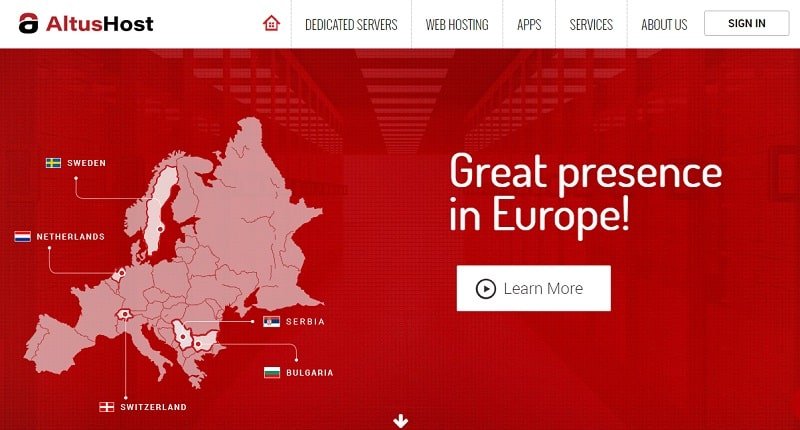
Altus Host operates from Switzerland, leveraging Swiss data protection laws for privacy-focused hosting. Their Bitcoin integration serves European customers seeking both privacy and performance.
Key Features:
- Swiss data center and legal jurisdiction
- Strong privacy protections under Swiss law
- Green hosting (renewable energy)
- Secure infrastructure with multiple redundancies
- Direct cryptocurrency acceptance
- European data protection compliance
💵 Pricing: Plans start at CHF 15/month (approximately $17) for 2 cores, 2GB RAM, 50GB SSD, and 1TB bandwidth. Premium options reach CHF 40+/month for enhanced resources.
🪙 Bitcoin Payment Process: Altus Host accepts Bitcoin directly without third-party processors. Swiss location means they operate under strict financial regulations while maintaining privacy standards. Payment confirmation takes 1-3 blocks depending on network conditions.
✅ Pros: Swiss jurisdiction provides exceptional privacy protections. Green hosting appeals to environmentally conscious customers. Direct crypto acceptance without intermediaries. Strong data protection framework.
🤔 Cons: Higher pricing due to Swiss operating costs. Limited to Swiss data center (low latency for Europe, higher latency elsewhere).
🤩 Best for: Privacy-focused users preferring Swiss legal protections and European hosting location.
Use AltusHost Discount code BNBOT20 for 20% Discount on any yearly VPS plan.
10. Impreza Host
Impreza Host positions itself as a provider with emphasis on quick deployment and cryptocurrency payments. Their infrastructure targets users wanting immediate provisioning.
Key Features:
- Instant VPS setup (under 5 minutes)
- Advanced DDoS protection included
- 24/7 network monitoring
- Multiple cryptocurrency options
- KVM virtualization
- Offshore hosting options
💵 Pricing: Plans start at $10/month for 2 cores, 2GB RAM, 40GB SSD, and 2TB bandwidth. Pricing includes DDoS protection that other providers charge extra for.
🪙 Bitcoin Payment Process: Impreza Host accepts Bitcoin, Monero, and other cryptocurrencies directly. Payment system generates invoice with 20-minute expiration. Confirmation takes 2 blocks, then automatic provisioning begins immediately.
✅ Pros: Fastest provisioning time in this comparison. DDoS protection included at base price. Multiple cryptocurrency options for flexibility. Offshore hosting available.
🤔 Cons: Newer company with shorter public operating history. Limited customer reviews compared to established providers.
🤩 Best for: Users needing immediate VPS deployment and willing to try emerging providers with strong crypto focus.
CHECK IMPREZA HOST VPS PLANS →
11. Hostwinds
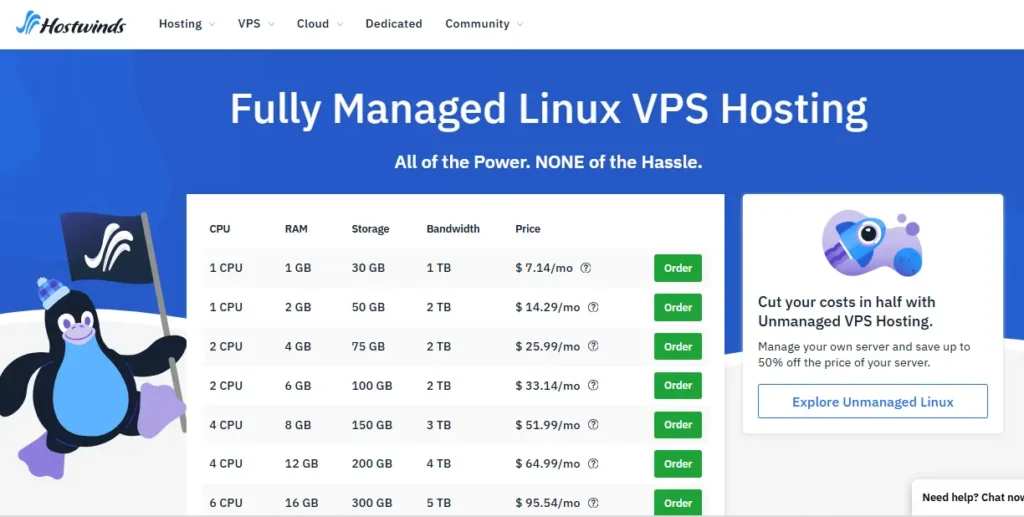
Hostwinds operates as an established provider with cryptocurrency payment support. Operating since 2010, they offer both Linux and Windows VPS options with Bitcoin acceptance.
Key Features:
- LiteSpeed web servers for improved performance
- Free SSL certificates (Let’s Encrypt)
- Resource monitoring and alerts
- Multiple global data centers (US, Canada, EU, Singapore)
- 99.9% uptime SLA
- Windows VPS with Bitcoin payment
- Nightly backups available
💵 Pricing: VPS plans start at $7.50/month for 1 core, 2GB RAM, 30GB SSD, and unmetered bandwidth.
🪙 Bitcoin Payment Process: Hostwinds uses a payment processor for Bitcoin transactions. Select cryptocurrency payment during checkout, complete the invoice within 15 minutes, and wait for confirmation.
✅ Pros: Free website migration, free SSL certificates. LiteSpeed performance improvements benefit most web applications. Multiple data center options. One of few providers offering Windows VPS with Bitcoin payment.
🤔 Cons: Bitcoin payment option not prominently featured on homepage. Slightly higher pricing on certain plans.
🤩 Best for: Users needing Windows VPS with cryptocurrency payment options, or those prioritizing established reliability.
12. Cherry Servers
Cherry Servers provides infrastructure focused on blockchain and Web3 = hosting optimized for blockchain and cryptocurrency applications with extensive cryptocurrency support.
Key Features:
- Supports 15+ cryptocurrencies through CoinGate
- Bare metal and VPS options
- Hourly or monthly billing flexibility
- High-performance infrastructure optimized for crypto/blockchain
- Data centers in Europe and US
- Advanced network configurations
💵 Pricing: Hourly or monthly billing with flexible plans. Pricing varies based on configuration.
🪙 Bitcoin Payment Process: Accepts Bitcoin and 15+ other cryptocurrencies via CoinGate. Supports wide range of crypto wallets and payment methods.
✅ Pros: Crypto-native infrastructure understanding. Extensive cryptocurrency support beyond just Bitcoin. Flexible hourly billing. Over 80 payment methods including crypto.
🤔 Cons: Exclusively unmanaged servers. No free migration or SSL certificates. Requires technical expertise.
🤩 Best for: Blockchain developers, Web3 projects, and users needing extensive cryptocurrency payment options with performance-optimized infrastructure.
CHECK CHERRY SERVERS VPS PLANS →
Your specific needs determine which provider deserves your Bitcoin. Budget buyers focus on Hostiner, RackNerd or Host Sailor. Privacy advocates choose Abelohost or Altus Host. Performance seekers select Cherry Servers. Those who want european servers + performance, choose Snel.com. Asian users prefer Shinjiru.
Bitcoin VPS Buying Mistakes to Avoid
Even experienced cryptocurrency users make errors when purchasing VPS hosting with Bitcoin. These mistakes cost money, compromise security, or create unnecessary headaches.
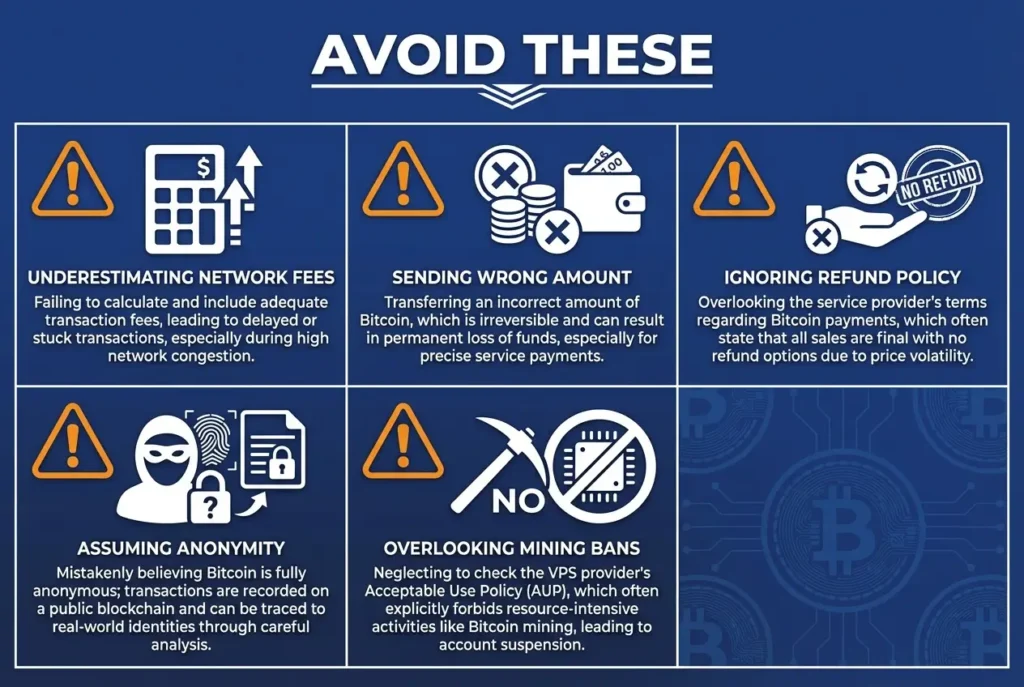
You see a VPS plan advertised at 10 dollars per month and assume sending 10 dollars worth of Bitcoin finishes the purchase. The invoice clears, but the provider expects you to pay network fees on top. Your payment arrives short and the order fails or stays pending.
Bitcoin network fees in 2025 usually average about 0.60 to 2.40 dollars. During congestion, fees can reach 10 to 20 dollars or more per transaction according to blockchain analytics data. Some payment flows expect you to send the invoice amount plus your own transaction fee separately.
Solution Always check the total cost including network fees before you pay. During high congestion, consider waiting for lower fees or using SegWit, Segregated Witness. SegWit reduces transaction size and can cut fees by about 30 to 40 percent.
Payment processors create invoices for exact Bitcoin amounts such as 0.00234567 BTC. You round it to 0.00235 BTC and think it is close enough. The system marks the payment as incorrect. In worse cases, you send Bitcoin Cash or another coin to a Bitcoin only address and the funds become inaccessible.
If you already sent the wrong amount, you should contact provider support at once. Do not send extra payments until they confirm the next step. Some systems can fix mistakes, but a delay makes recovery harder.
Solution Copy and paste invoice amounts exactly. Double check the currency type before you send. Many wallets support several cryptocurrencies and one wrong choice sends funds to a different blockchain with no recovery. When possible, scan QR codes instead of entering addresses and amounts by hand.
Bitcoin transactions finalize after confirmations. Banks and card networks allow disputes and chargebacks. Bitcoin does not. Many providers state that cryptocurrency payments are non refundable or only refunded as account credit, not cash.
You might pay 120 dollars in Bitcoin for a yearly plan, then decide after one month that you dislike the service. If the terms say crypto payments are final, you lose the remaining 110 dollars worth of hosting time.
Solution Read the refund policy before you pay. Start with monthly billing so you can test the provider. Move to annual billing only after you confirm that performance, support, and features meet your needs.
Bitcoin VPS payments improve privacy but do not give full anonymity. The payment itself may not include your name or address. Your IP address, server usage patterns, DNS queries, and domain registration data can still identify you.
Providers log IP addresses for abuse handling and legal compliance. In many regions, hosts must keep records. Law enforcement can match your Bitcoin transaction with server logs, domain records, and your network activity.
Solution If you need strong anonymity, combine Bitcoin payments with Tor, VPN routing, anonymous domain registration, and strict operational security. Treat Bitcoin as a privacy tool that hides details from casual observers, not as a shield against serious investigations.
You buy a VPS with Bitcoin and plan to mine cryptocurrency as a side project. Within hours, the provider suspends your account for breaking the terms of service. Almost all VPS providers forbid mining in their acceptable use policies.
Mining keeps CPU usage near 95 to 100 percent, slows down shared infrastructure, and earns little profit on VPS hardware. Providers see this in resource monitoring and shut down accounts to protect other customers.
Solution Read acceptable use policies before you run resource heavy workloads. If you want to mine, use dedicated servers that clearly allow mining or choose specialized mining services instead of a standard VPS.
- ⚠️ Always include network fees in budget calculations
- ⚠️ Copy exact payment amounts, never round
- ⚠️ Understand refund policies before purchasing
- ⚠️ Privacy does not equal anonymity
- ⚠️ Mining is prohibited by virtually all VPS providers
These mistakes seem obvious in hindsight but occur regularly among first-time Bitcoin VPS buyers. Five minutes of careful review prevents hours of support headaches.
Use Case Recommendations
Different applications demand different hosting characteristics. Match providers to your specific situation.
Best for Developers: RackNerd, Host Sailor, Cherry Servers
Development work requires root access, custom configurations, and flexibility to install whatever software your project needs.
- RackNerd, Host Sailor, and Cherry Servers provide unmanaged VPS with full root access at competitive prices.
You can install custom databases, configure specific PHP versions, compile software from source, and modify system configurations freely.
Best for Privacy: Abelohost, Altus Host, Snel.com
Privacy-focused projects benefit from providers operating under strong data protection laws with minimal registration requirements.
- Abelohost accepts completely anonymous registration and operates offshore.
- Altus Host leverages Swiss jurisdiction with strict privacy regulations.
- Snel.com benefits from Netherlands data protection framework.
All three accept Bitcoin directly without payment processor intermediaries.
Best for Performance: Snel.com, Cherry Servers, Hostinger
High-traffic applications or database-heavy sites need maximum performance.
- Snel.com offers high-frequency CPUs and NVMe storage optimized for speed.
- Cherry Servers provides blockchain-optimized infrastructure.
- Hostinger’s global NVMe infrastructure delivers consistent performance.
All three maintain strong uptime records.
Best for Budget: RackNerd, Host Sailor, Hawk Host
Cost-conscious buyers get solid infrastructure without premium pricing.
- RackNerd offers annual plans under $20.
- Host Sailor provides custom configurations starting at $6/month.
- Hawk Host delivers reliability in the $7.50-15/month range.
All three include essential features like backups and decent support without cutting corners on uptime.
Best for Asian Traffic: Shinjiru
Applications serving Asian audiences need Asian data center locations to minimize latency.
- Shinjiru operates in Malaysia and Hong Kong with network infrastructure optimized for Asian connectivity.
Their compliance tools also help navigate varied Asian regulatory environments.
Best for Windows VPS: Hostwinds
Most crypto VPS providers focus on Linux.
- Hostwinds offers Windows VPS with Bitcoin payment, making them the top choice for applications requiring Windows Server environments.
| Use Case | Recommended Providers | Key Reason |
|---|---|---|
| Development | RackNerd, Host Sailor, Cherry Servers | Root access, custom configs |
| Privacy | Abelohost, Altus Host, Snel.com | Anonymous options, strong laws |
| Performance | Snel.com, Cherry Servers, Hostinger | High-frequency CPUs, NVMe storage |
| Budget | RackNerd, Host Sailor, Hawk Host | Low prices, solid reliability |
| Asian Traffic | Shinjiru | Asian data centers, low latency |
| Windows VPS | Hostwinds | Windows Server with Bitcoin |
Your primary use case should drive your provider selection more than any single feature or price difference.
Frequently Asked Questions
No. Mining is almost always prohibited in provider terms of service because it counts as resource abuse. Mining uses 95 to 100 percent of CPU all the time, slows down shared infrastructure for other users, and breaks acceptable use policies.
Providers detect mining through automated resource monitoring and suspend accounts quickly. If you need mining capabilities, choose dedicated servers that clearly allow mining or use specialized mining services.
Most Bitcoin payments finish in about 10 to 60 minutes. Timing depends on network congestion and how many confirmations the provider requires, usually 1 to 3. Each confirmation is a new block added to the blockchain, around every 10 minutes on average.
During busy periods, confirmations can take several hours. Your VPS usually does not provision until the payment reaches the required number of confirmations.
No. Bitcoin payments provide privacy because transactions use wallet addresses instead of personal information. They do not provide full anonymity.
Your IP address, server usage patterns, DNS queries, and domain registrations can still identify you. Providers log connection data for abuse prevention and to meet legal requirements. Law enforcement can correlate Bitcoin transactions with server activity patterns.
True anonymity needs more than Bitcoin. You should combine payments with Tor, VPN routing, anonymous domain registration, and careful operational security.
Most payment systems do not process partial payments. If you send less Bitcoin than required, the payment usually sits unprocessed until the invoice expires, often after 15 to 30 minutes.
After expiry, the system may return funds to your wallet minus network fees, or hold the amount as account credit. If you underpay by mistake, contact provider support immediately. Do not send extra payments without clear instructions because multiple unmatched transactions make the situation harder to fix.
Refund rules depend on the provider. Bitcoin transactions finalize immediately and cannot be reversed like credit card chargebacks.
Many providers do not offer refunds for cryptocurrency payments. Others only provide account credit that you can use for future services, not as cash back. A few providers give partial refunds within set time limits.
Always read the refund policy before you pay. Because Bitcoin is irreversible, provider policies matter more than payment processor protections.
Final Recommendations & Next Steps
You now have detailed information on 12 vetted Bitcoin VPS providers, step-by-step buying instructions, and warnings about common mistakes.
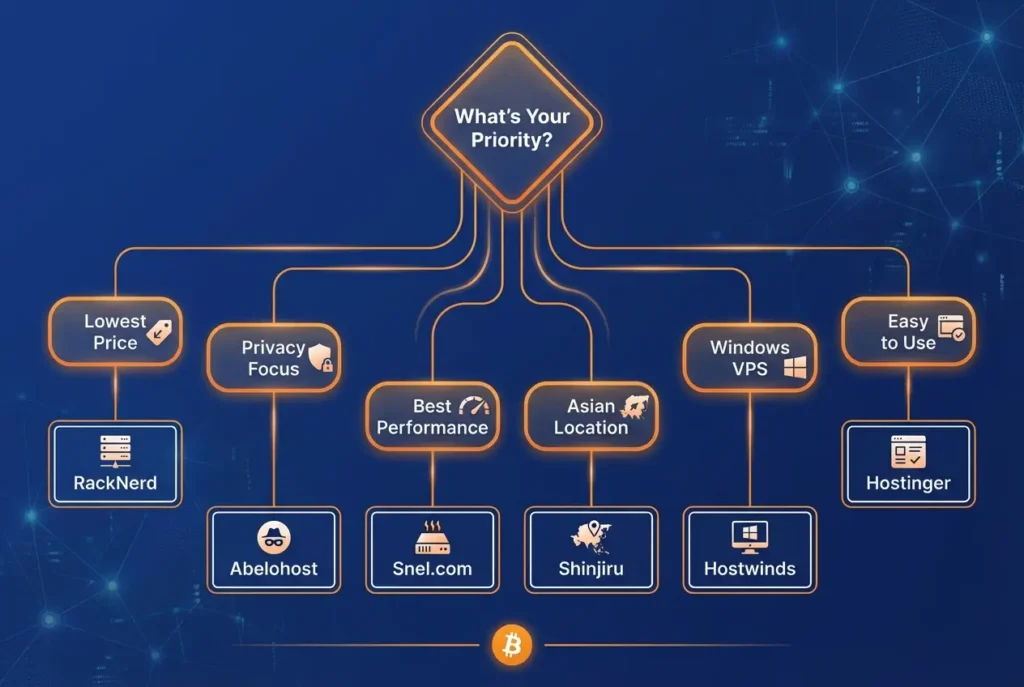
Top picks by category:
- Best overall value: RackNerd (competitive pricing, solid infrastructure, free backups)
- Best established provider: Namecheap (long Bitcoin history, cPanel included, dual payment processors)
- Best for privacy: Abelohost (anonymous registration, offshore options, direct Bitcoin)
- Best for performance: Snel.com (high-frequency CPUs, NVMe storage, crypto-native)
- Best for Asia: Shinjiru (Asian data centers, 25-year history, offshore specialization)
- Best for Windows: Hostwinds (Windows VPS with Bitcoin, established operation)
- Best for Web3: Cherry Servers (15+ cryptocurrencies, blockchain-optimized)
- Best for beginners: Hostinger (user-friendly interface, global reach, managed features)
Start with monthly billing to test any provider before committing to annual contracts. Most providers allow easy upgrades when you need more resources. Verify backup policies and test restore procedures early, before you need them urgently.
“Should I choose the cheapest option or pay more for features?”
Choose your provider based on your specific needs rather than lowest price alone. A $5/month VPS that goes offline regularly costs more than a $15/month VPS that stays online reliably. Web3 hosting continues growing as more projects adopt crypto-native infrastructure.
Review the comparison table above, identify your top priority (budget, privacy, performance, location), and select the matching provider. The Bitcoin payment process takes under 30 minutes once you understand the steps.
Your VPS will be running within an hour of payment confirmation.
Article last updated: November 2025
Previous Articles:
- Lyn Alden Rules Out Major Bitcoin Crash, Sees Bull Market Ahead
- BlackRock: Bitcoin Seen More as Digital Gold Than Payment Tool
- Strategy (MSTR) Faces Liquidation Fears Amid Bitcoin Decline
- SOL Strategies Stakes Entire Solana Ecosystem Beyond Token
- Ripple XRP Drops 18% in November, Poised for December Rebound

