
KEY TAKEAWAYS
- Ramaswamy presented his crypto policy framework, called ‘The Three Freedoms of Crypto’, at the North American Blockchain Summit
- The framework states that developers of smart contract code should not be held liable for user actions, and promises to prosecute bad actors, not the code or developers
- The framework also promises to provide safe harbor exemptions from securities laws for new cryptocurrencies, and to prevent federal agencies from creating rules that limit the use of self-hosted wallets
- Ramaswamy supports the use of crypto mixers, such as Tornado Cash, as a form of free speech, and criticizes the U.S. government for sanctioning them
- Ramaswamy’s crypto policy framework raises questions about the balance between privacy and regulation in crypto, and the potential impact on the future of money and financial systems
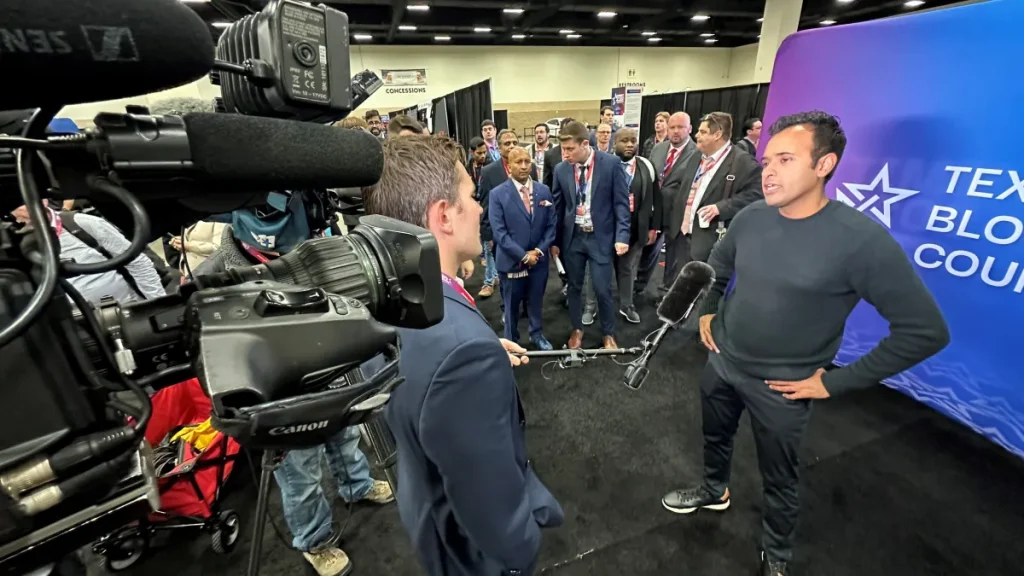
Vivek Ramaswamy, a Republican presidential candidate and former biotech entrepreneur, unveiled his crypto policy framework at the North American Blockchain Summit on November 16.
The framework, called ‘The Three Freedoms of Crypto’, aims to establish clear regulations for the crypto industry, support innovation and growth in the sector, and balance regulation with technological advancements.
Ramaswamy’s first freedom of crypto is that developers of smart contract code should not be held liable for user actions.
He argues that code is a form of speech and should be protected by the First Amendment.
He also promises to prosecute bad actors who use crypto for illegal purposes, such as money laundering, terrorism financing, or tax evasion, but not the code or developers that enable such activities.
Ramaswamy’s second freedom of crypto is that new cryptocurrencies should be exempt from securities laws for a certain period of time, or until they achieve sufficient decentralization.
He proposes to create a safe harbor provision that would allow new crypto projects to launch without fear of regulatory backlash.
He also pledges to work with Congress and the Securities and Exchange Commission (SEC) to clarify the definition and classification of cryptocurrencies.
Ramaswamy’s third freedom of crypto is that federal agencies should not create rules that limit the use of self-hosted wallets, which allow users to store their own private keys and control their own funds.
He claims that such rules would infringe on the privacy and autonomy of crypto users, and create barriers to entry for new participants. He also vows to oppose any attempts to ban or restrict the use of encryption or peer-to-peer technology.
Ramaswamy also expressed his support for the use of crypto mixers, such as Tornado Cash, which allow users to deposit crypto and send it to different addresses, obscuring the identity of the recipient.
He criticized the U.S. government for sanctioning Tornado Cash in October for facilitating money laundering. He said that sanctioning mixers violates freedom of speech and undermines innovation.
Ramaswawy is running as a Republican candidate for the U.S. presidency in 2024. He is currently in third or fourth place in New Hampshire primary polls, getting between 0% and 8% of the Republican vote according to Nov. 16 polls.
He accepts Bitcoin campaign donations and competes against candidates like Donald Trump, Nikki Haley, and possibly Ron DeSantis.
Ramaswamy’s crypto policy framework raises questions about the balance between privacy and regulation in crypto, and the potential impact on the future of money and financial systems. Some experts suggest that privacy pools in crypto may offer a solution that preserves both privacy and regulatory compliance.
Others warn that unregulated crypto may pose risks to financial stability and national security.
LATEST POSTS
- OccamDAO Announces Expansion to Cosmos Ecosystem
- Verified USD Foundation Launches Community-Driven Stablecoin USDV
- EarnTV: Transforming Video Streaming Through Blockchain Innovation
- Cloud Computing and Risk Management: An Overview
- LimeVPN Review: Details, Features and Pricing

